Mortgages
May 26, 2026
Dutch House Prices Rose 4.3% in April 2026
Dutch house prices rose 4.3% year-on-year in April 2026. The average home now costs €486,101. Here is what it means for buyers.
Dutch house prices rose 4.3% year-on-year in April 2026. The average home now costs €486,101. Here is what it means for buyers.
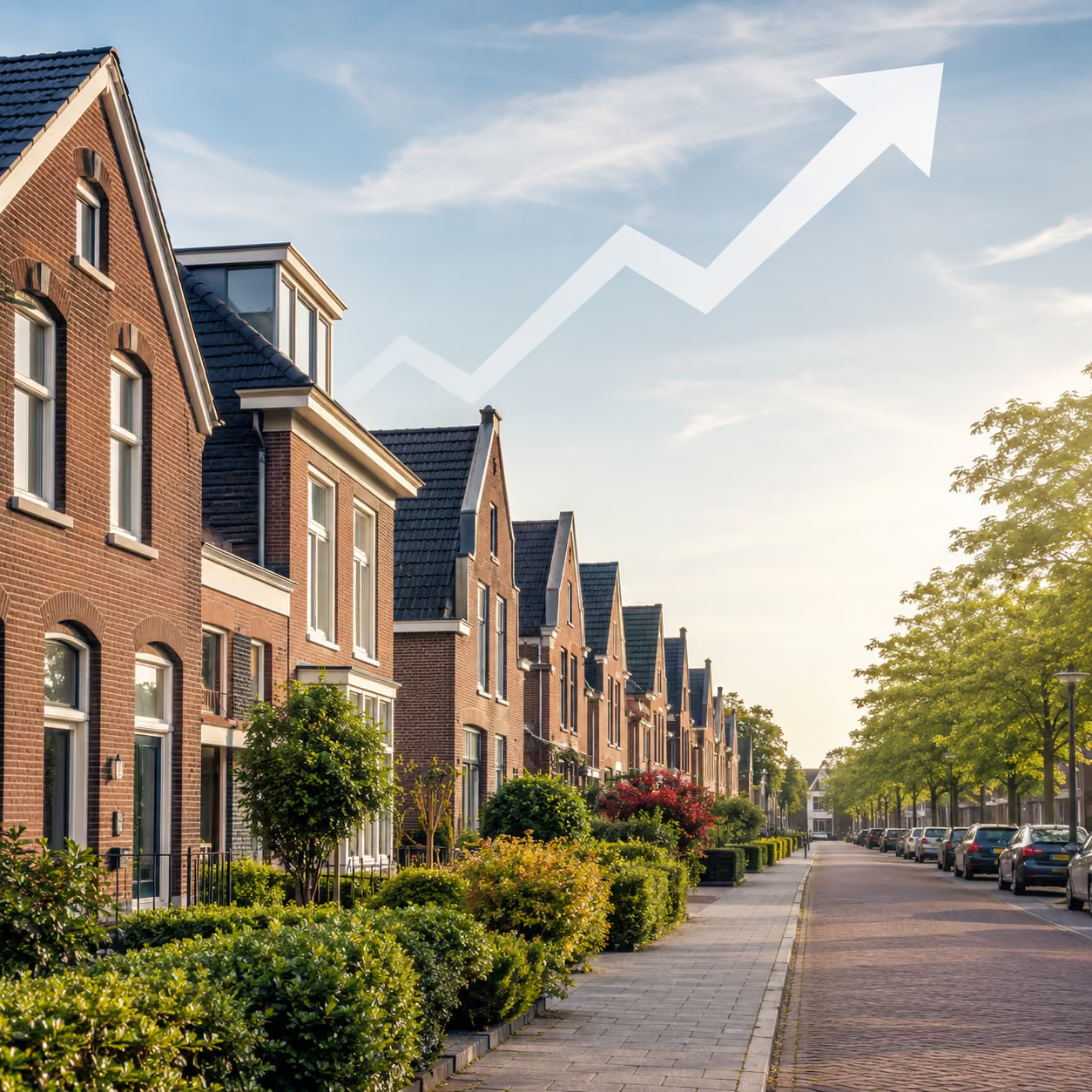
The latest figures from Statistics Netherlands (CBS) and the Land Registry (Kadaster) confirm what many buyers are already feeling: buying a home in the Netherlands is getting more expensive.
In April 2026, prices for existing homes were 4.3 percent higher than the same month last year. The average transaction price now sits at €486,101. And while prices held steady between March and April, the longer-term trend is firmly upward.
If you are planning to buy in the Netherlands, as an expat, a first-time buyer, or someone upgrading to a larger property, here is what the data actually means for you.
To understand April's figures, it helps to zoom out. Dutch house prices peaked in mid-2022, then fell sharply as mortgage rates rose across Europe. Since mid-2023, prices have been recovering steadily.
April 2026 marks a significant milestone: prices are now 15.8 percent above the previous peak in July 2022. In other words, the dip is fully erased, and then some. Anyone waiting for a meaningful price correction before buying has been waiting through a sustained recovery.
Month-on-month, prices were flat between March and April. That is not necessarily a sign of weakness, it may simply reflect seasonal patterns and the fact that rates have ticked up recently. But it does suggest the pace of annual growth is beginning to moderate compared to the sharper rises seen earlier in the recovery.
Price growth is being supported by solid transaction volumes. In April 2026, 19,454 existing homes were sold, nearly 3 percent more than in April 2025.
Over the first four months of 2026, 75,403 homes changed hands. That is a 7 percent increase compared to the same period last year. More transactions at higher prices signals a market with genuine demand, not just speculative momentum.
For buyers, this matters because it means competition is real. Properties are moving. Waiting on the sidelines rarely pays off in a market with structural supply constraints like the Netherlands.
An average purchase price of €486,101 is a number worth sitting with. At current mortgage rates, which have been rising in recent weeks, financing that amount requires careful planning.
Let's put it in practical terms.
Under Dutch mortgage regulations, you can borrow a maximum of 100 percent of a property's value. That means for a €486,000 home, your mortgage covers the purchase price, but the additional costs, buyer's transfer tax (2 percent for non-first-time buyers), notary fees, mortgage advisor fees, and valuation costs, come out of your own pocket. These typically add up to 4 to 6 percent of the purchase price on top.
For a €486,000 property, that means having roughly €20,000 to €30,000 in savings available beyond your mortgage, depending on your situation.
If you are buying your first home in the Netherlands and the property is under €510,000, you are exempt from transfer tax entirely. That is a meaningful saving of nearly €10,000 on an average-priced home. This exemption applies once, so it is worth understanding exactly how to use it before you make an offer.
Rising prices combined with recently rising mortgage rates means the monthly cost of buying a home is increasing faster than prices alone suggest. A 0.5 percent increase in your mortgage rate on a €400,000 loan adds roughly €150 per month to your payments. Small rate movements have real budget implications at these price levels.
This is exactly why getting a mortgage assessment before you start viewing properties is so important. You need to know your actual budget, not an estimate based on last year's rates.
If you are an expat considering a purchase, the April data reinforces something worth acknowledging directly: the longer you wait, the more expensive this market gets.
That is not a reason to rush into a bad decision. It is a reason to get your finances structured and your mortgage options understood now, so that when the right property appears, you can move quickly and confidently.
Expats often face additional complexity in the mortgage process, employment contract type, visa duration, and income from outside the Netherlands all affect what lenders will offer. Working with an independent advisor who understands these dynamics gives you a clearer picture of what is genuinely possible for your situation.
With an average price of €486,101, buying in major cities like Amsterdam or Rotterdam will likely take you well above that figure. More affordable entry points exist in smaller cities and municipalities, where new build apartments and terraced houses can still be found at lower price points.
The key question for first-time buyers is not just "can I afford this property?" but "can I sustainably afford this mortgage for the next 10 to 30 years, across different rate environments?" A good independent advisor will stress-test your situation against different scenarios, not just the current rate.
This is the question many buyers ask, and it deserves a direct answer.
Prices in the Netherlands are now 15.8 percent above the previous 2022 peak. Anyone who waited for a correction after that peak and is still waiting has seen prices recover fully and continue rising. The structural factors driving Dutch house prices, a shortage of housing stock, strong demand in major cities, and limited land for new construction, have not changed.
That does not mean prices cannot soften in the short term. A sustained rise in mortgage rates or a broader economic slowdown could ease price growth. But trying to time the market precisely is a strategy that has cost many Dutch buyers dearly over the past decade.
Buying when you are financially ready, at a price that is genuinely affordable for your income and circumstances, remains the most reliable approach.
The Dutch housing market rewards buyers who are prepared. That means knowing your borrowing capacity, understanding the total costs involved, and having a mortgage in principle before you start making offers.
At Financial Consultancy Holland, we work with expats and first-time buyers across the Netherlands every day. We give you a clear, honest picture of what you can afford at today's rates, and help you build a mortgage plan that works for your situation, not a generic one.
Reach out to Financial Consultancy Holland, independent mortgage advisors working entirely in your interest.
---
Contact Financial Consultancy Holland:
Email: info@fc-holland.nl
Phone: 0622870981
Address: Boompjes 40, 3011 XB Rotterdam