Mortgages
January 27, 2026
Dutch House Prices Keep Rising in 2026
House prices keep rising in 2026, but more slowly. Discover what this means for first-time buyers and expats in the Netherlands.
House prices keep rising in 2026, but more slowly. Discover what this means for first-time buyers and expats in the Netherlands.
The Dutch housing market continues to surprise people. After several years of strong price increases, house prices are still rising in 2026, but at a noticeably slower pace. For many buyers, especially expats and first-time buyers, this raises important questions.
Is the market finally cooling down?
Is it becoming easier to buy a home?
And how do income growth, mortgage rates, and housing shortages affect your chances?
In this article, we break down what’s happening in the Dutch housing market in 2026, what to expect in the coming years, and most importantly what this means for your mortgage options. We’ll keep it clear, practical, and focused on real-life decisions, not headlines.
The Dutch housing market came out of 2025 remarkably strong. Prices rose sharply, transaction numbers increased, and demand stayed high across most regions. But as we move through 2026, the market is entering a new phase.
Not a downturn, but a slowdown.
Price growth is still positive, yet clearly more moderate than in the previous two years. This shift matters because it changes how buyers should approach their plans, expectations, and hypotheekadvies.
At first glance, rising house prices might seem strange. Mortgage interest rates are no longer falling, and borrowing has not become cheaper. So what’s driving prices up?
The answer lies mainly in incomes and supply.
Many households have seen their salaries increase faster than inflation. That means more disposable income at the end of the month. When people can afford higher monthly payments, they can usually borrow more, even if interest rates are slightly higher than before.
At the same time, there are simply not enough homes available. Demand continues to exceed supply, especially in urban areas and popular regions for expats.
In short: more buying power, too few homes.
While prices are expected to keep rising, the pace is calmer than before.
Instead of the sharp increases seen in earlier years, the market is moving toward more “normal” growth levels. This is good news for buyers who felt completely priced out before, but it does not mean homes are suddenly becoming cheap.
For anyone planning to buy their first home or a property as an expat, this slower growth creates a window where careful planning and good mortgage advice really matter.
One of the biggest concerns for buyers is the hypotheekrente. Over the past year, interest rates have edged upward, especially for fixed-rate mortgages.
Most banks are responding to higher long-term funding costs, which influences mortgage pricing across the market. The expectation for 2026 and beyond is not a sharp jump, but a gradual, controlled increase.
Higher mortgage rates usually reduce how much people can borrow. But this time, income growth is offsetting much of that effect.
Think of it like walking uphill with better shoes. The climb is harder, but you’re better equipped.
For many buyers, especially dual-income households and skilled expats, borrowing capacity remains strong enough to support continued demand.
This is why the housing market cools slightly, instead of crashing.
With interest rates no longer at historic lows, mortgage structure becomes more important.
Questions like:
These decisions have a bigger impact now than when rates were near zero. This is where working with an onafhankelijk hypotheekadviseur can make a real difference.
Even though demand remains strong, the number of home sales is expected to decline slightly in the coming years.
This does not mean fewer people want to buy it means fewer homes are available.
Several temporary factors boosted sales before, such as investors selling rental properties. That effect is fading. What remains is a structurally tight housing market.
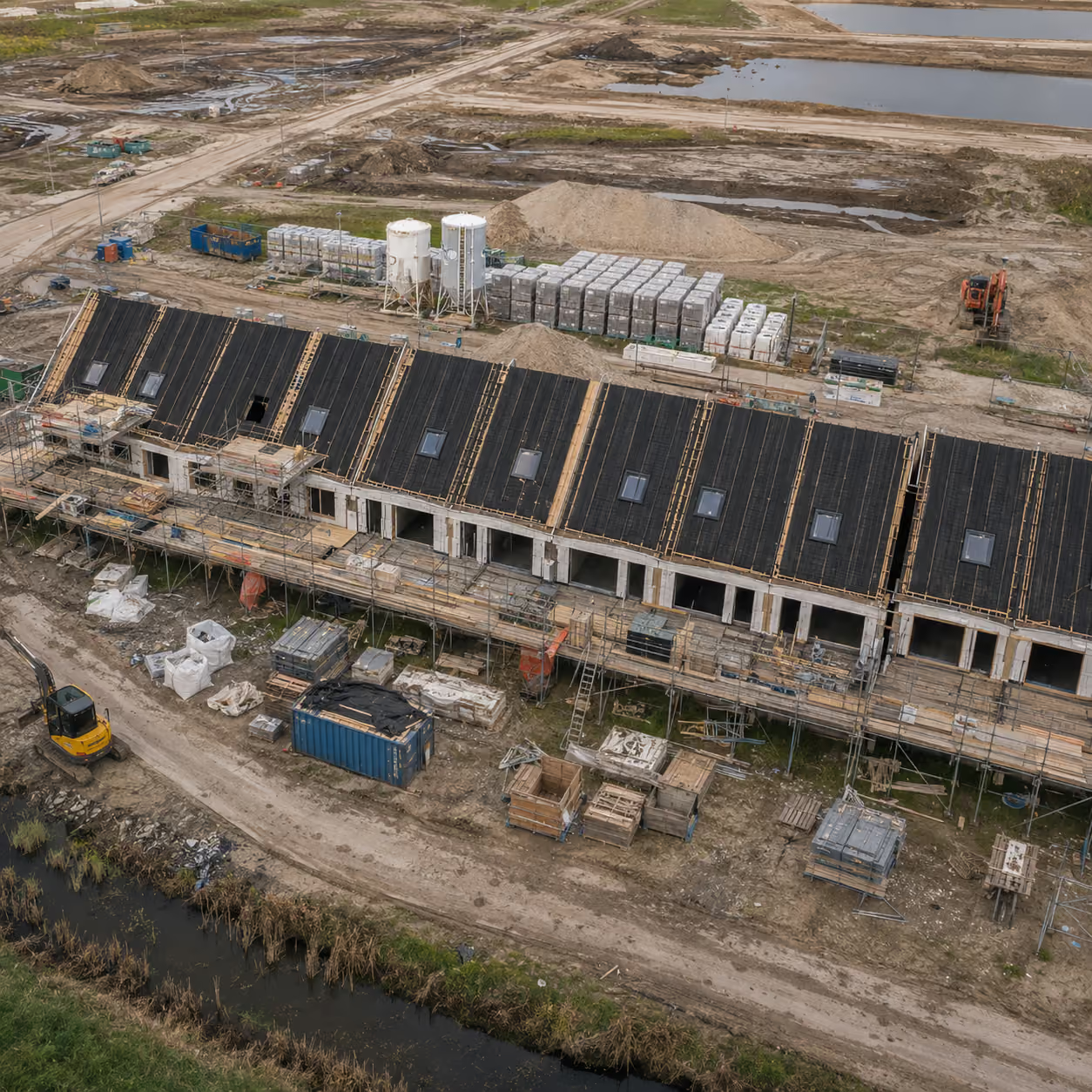
New construction sounds like the obvious solution, but in reality it takes a long time.
From planning to completion, new housing projects often take many years. Add regulatory hurdles, labor shortages, environmental rules, and financing challenges, and progress slows even more.
As a result, the housing shortage remains one of the strongest forces pushing prices upward and it will likely stay that way for years.
If you’re planning your eerste huis kopen, the market may feel intimidating but it’s not hopeless.
Slower price growth means bidding wars are slightly less extreme than before. However, competition is still real, and preparation is key.
Many first-time buyers lose homes simply because financing wasn’t fully prepared. Solid mortgage planning gives you speed and confidence when it matters.
For expats, the Dutch housing market can feel extra complex. Different rules, unfamiliar terminology, and lender-specific requirements often create uncertainty.
The good news? Expats remain an important buyer group, and many lenders actively serve this market.
A hypotheek voor expats requires tailored advice. What works for a Dutch national doesn’t always apply to international buyers.
If you already own a home, rising prices can increase your equity. That may create opportunities but also questions.
Is refinancing interesting?
Should you lock in a rate?
Does moving still make sense?
Even with rising prices, interest rates are higher than before. Decisions around refinancing or moving should be based on long-term planning, not fear of missing out.
A good mortgage review focuses on:
Here’s the core takeaway for 2026 and beyond:
House prices in the Netherlands are still rising, but at a slower and more manageable pace. Income growth keeps demand alive, housing shortages limit supply, and mortgage rates gradually increase without shocking the system.
This is not a market driven by hype it’s driven by fundamentals.
That means informed buyers with realistic expectations and proper guidance are in the strongest position.
The Dutch housing market remains tight, competitive, and complex but not unpredictable.
Whether you’re a first-time buyer, an expat, or an existing homeowner, the key is understanding how today’s market conditions affect your personal situation.
There is no one-size-fits-all solution. Mortgage rules, income structures, and long-term plans all matter.
Good hypotheekadvies is not about chasing the lowest rate it’s about building a mortgage that fits your life, now and in the future.
At Financial Consultancy Holland, we help people navigate the Dutch housing market with clarity and confidence. As an onafhankelijk hypotheekadviseur, we look beyond standard solutions and focus on what truly fits your situation whether you’re buying your first home, moving, or settling in the Netherlands as an expat.
If you’d like calm, transparent, and personal mortgage advice tailored to you, we’re here to help step by step, without pressure.