Mortgages
July 13, 2026
Why the Dutch Housing Shortage Is Really a Housing Mismatch
The Dutch housing shortage isn't just about numbers. Learn what the housing mismatch means for buying your first home or a mortgage for expats.
The Dutch housing shortage isn't just about numbers. Learn what the housing mismatch means for buying your first home or a mortgage for expats.
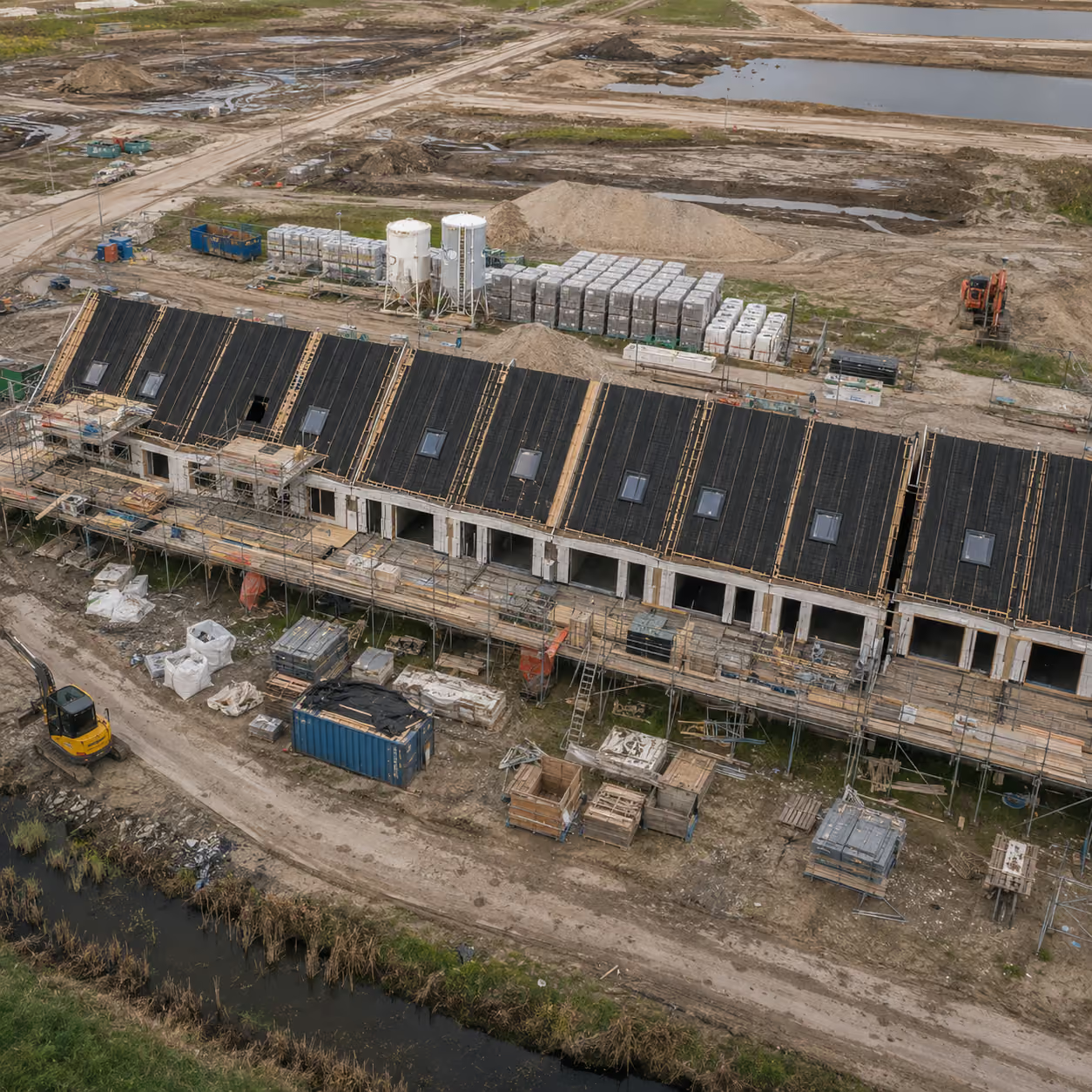
The Netherlands needs more homes. That part of the story you already know. But new construction figures reveal something more interesting: new-build housing supply just hit its highest level since 2015, yet sales of those same new homes dropped by roughly 7 percent. If there are more homes than in almost a decade, why are fewer of them selling?
The honest answer is that the Dutch housing shortage isn't only a numbers problem. It's a mismatch problem. Builders are adding homes, but not always the homes people actually need or can afford. For first-time buyers, expats, and anyone trying to make sense of hypotheekregels Nederland (Dutch mortgage rules) while house hunting, understanding this mismatch matters just as much as tracking interest rates.
At first glance, more construction should mean more relief. Builders are clearly responding to years of pressure on the housing market. Yet buyers aren't showing up for all of it at the same pace.
Part of the explanation is simple: not every new home fits what today's buyers are looking for, or what they can realistically finance. A three-bedroom family house in the wrong location, at the wrong price point, does little for a starter trying to buy their first apartment, or for an expat who needs something smaller and closer to work.
Housing market professionals increasingly agree that the conversation has been too focused on how many homes get built, and not focused enough on which homes get built. Starters and seniors, in particular, are two groups that keep getting overlooked. Starters need affordable, smaller homes to get a foot on the property ladder. Seniors often want to downsize into something manageable, but there simply isn't enough suitable stock for them to move into.
That mismatch has consequences that ripple through the entire market, including for people who might assume it has nothing to do with them.
Here's a concept worth understanding if you're planning to buy your first home in the Netherlands: doorstroming, or housing flow. Think of the housing market as a chain. When a senior downsizes from a large family home into a smaller one, that frees up the family home for, say, a growing household. That household, in turn, frees up their starter home for someone buying their first place.
When that chain breaks, because there aren't enough smaller, affordable homes for seniors and starters, everyone further down the chain feels it too. Fewer homes become available at every price point, including the entry-level homes that first-time buyers and many expats are looking for. So even if you're not a senior or a first-time buyer yourself, a stalled housing chain still shapes what's on the market and what it costs.
If municipalities and developers already understand that starters and seniors need more suitable housing, why doesn't it simply get built faster? The answer usually comes down to money.
Many housing projects, especially the more affordable ones, run into what's known in Dutch planning circles as an "onrendabele top", an unprofitable gap. This happens when the money a developer earns from selling or renting homes doesn't cover the full cost of building them, plus the public infrastructure that has to go with them: roads, sewage systems, schools, and green space.
Put simply, building cheaper homes is often less profitable for developers than building expensive ones. Local governments can absorb some of that shortfall, but their budgets aren't unlimited. Without extra financial support, particularly from national government, the more affordable housing projects that starters and expats actually need are the ones most likely to stall or get delayed.
This is useful context if you've ever wondered why entry-level housing seems to lag behind, even in areas where demand is obviously high.
Here's a piece of practical good news buried in all this: housing economists point out that price differences between regions in the Netherlands are larger than they've been in a long time. Outside the Randstad (the Amsterdam, Rotterdam, The Hague, Utrecht corridor), homes are often considerably cheaper, and buying your first home may still be realistic there in a way it simply isn't in the bigger cities.
That doesn't mean everyone should uproot their life for a lower mortgage. But if you have flexibility in where you live or work, it's worth asking whether a slightly different location could make homeownership achievable sooner, and with a healthier monthly payment, rather than waiting for a mismatched market to sort itself out.
If you're trying to buy your first home, the housing mismatch is exactly why casting a wider net matters. Being open to different home types, or to areas slightly outside your first choice, can meaningfully expand what's realistically within reach. It's also a good reminder to get clear on your actual borrowing capacity early, rather than falling for a listing that looks perfect but doesn't fit your budget once the full picture of hypotheekregels Nederland is factored in.
If you're moving to, or already living in, the Netherlands, this housing mismatch can feel even more frustrating, because you're navigating an unfamiliar market on top of unfamiliar rules. A hypotheek voor expats (mortgage for expats) often comes with its own considerations: how your income is assessed, whether you qualify for certain schemes, and how lenders view your employment situation if you're not on a permanent Dutch contract. Regional flexibility, discussed above, can be especially valuable here, since many expats aren't tied to one specific neighborhood the way long-term residents might be.
If you already own a home and are thinking about moving, whether to downsize, upsize, or relocate, this is worth watching too. As municipalities and the national government work through funding for more suitable housing, the supply of homes that fit your next stage of life may gradually improve. In the meantime, it's a reasonable moment to review your current mortgage and see whether your existing terms still make sense for your plans.
The Dutch housing shortage isn't simply about a lack of homes. It's about a lack of the right homes in the right places at the right price, and about the funding gap that makes those homes harder to build. Regional price differences mean opportunity may exist outside the most competitive cities. And whether you're a starter, an expat, or someone already on the property ladder, understanding how the housing chain works helps explain what you're seeing in listings and pricing right now.
None of this means the Dutch housing market is unworkable. It means it rewards a bit more strategy: knowing where to look, understanding what you can genuinely afford, and getting the mortgage side of the equation right from the start. Markets shift, funding gaps get addressed over time, and opportunities open up in places people didn't expect. The buyers who do well are usually the ones who go in informed rather than in a hurry.
If you're weighing your options, whether that's buying your first home, exploring a mortgage for expats, or simply making sense of what's changing in the market, it helps to talk it through with someone who knows the details. At Financial Consultancy Holland, our advisors offer independent, personal guidance (onafhankelijk hypotheekadviseur) tailored to your situation, so you can make your next move with confidence rather than guesswork. Feel free to reach out whenever you're ready to talk through your options.