Finance
May 9, 2026
Nearly Half of All New Homes Built in the Netherlands in 2025 Were Apartments — What That Means for Buyers
The Netherlands added 69,000 new homes in 2025, nearly half apartments. What the data means for buyers in today's market.
The Netherlands added 69,000 new homes in 2025, nearly half apartments. What the data means for buyers in today's market.
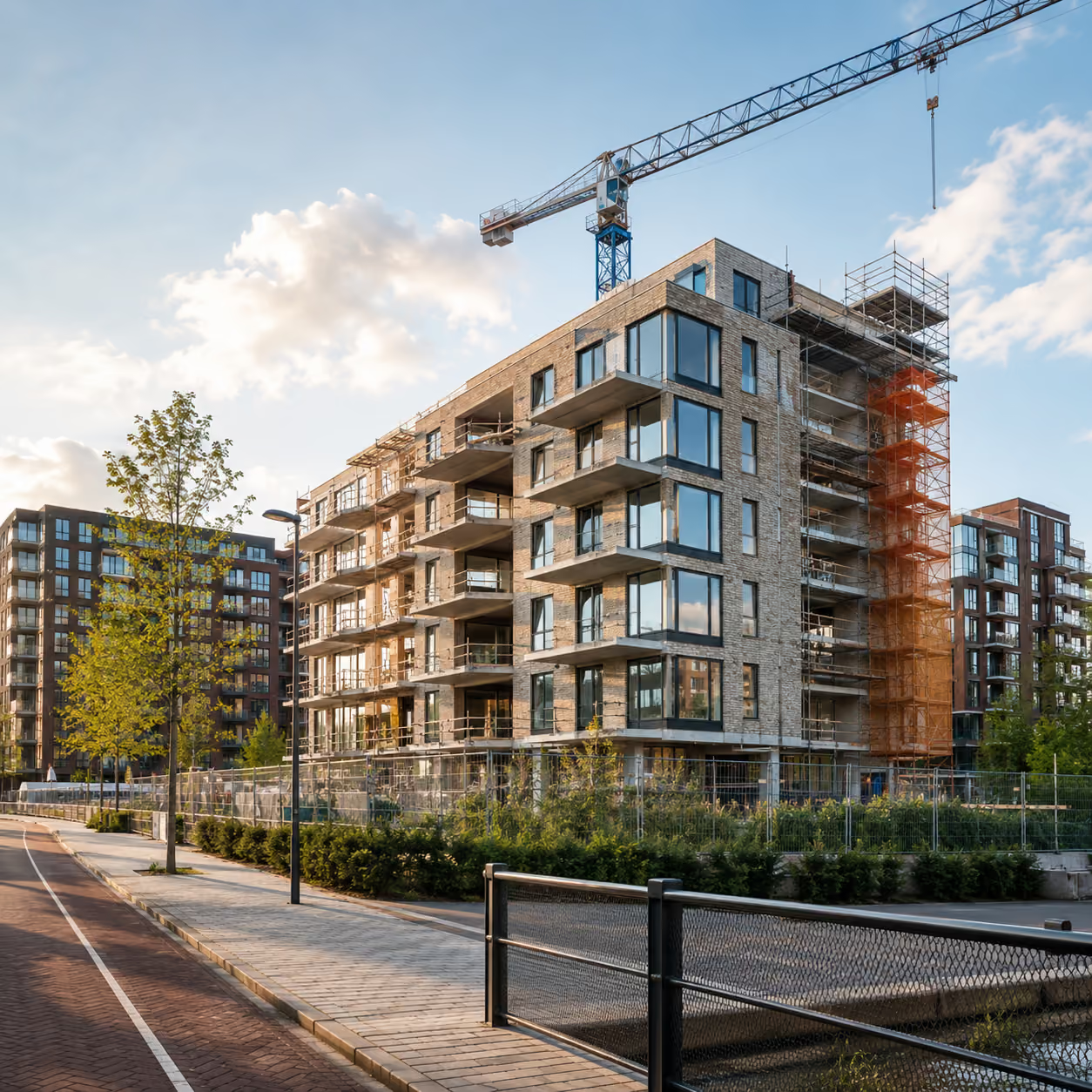
The Netherlands added 69,000 new homes in 2025, according to the latest figures from Statistics Netherlands (CBS). That sounds like progress. But look closer at the data, and a clear picture emerges: the country is building smaller, and it is building upward.
Almost half of those new homes were apartments. And that trend is not slowing down. If you are planning to buy property in the Netherlands,, whether as an expat or a first-time buyer, understanding what is being built, where, and at what size matters for your decision.
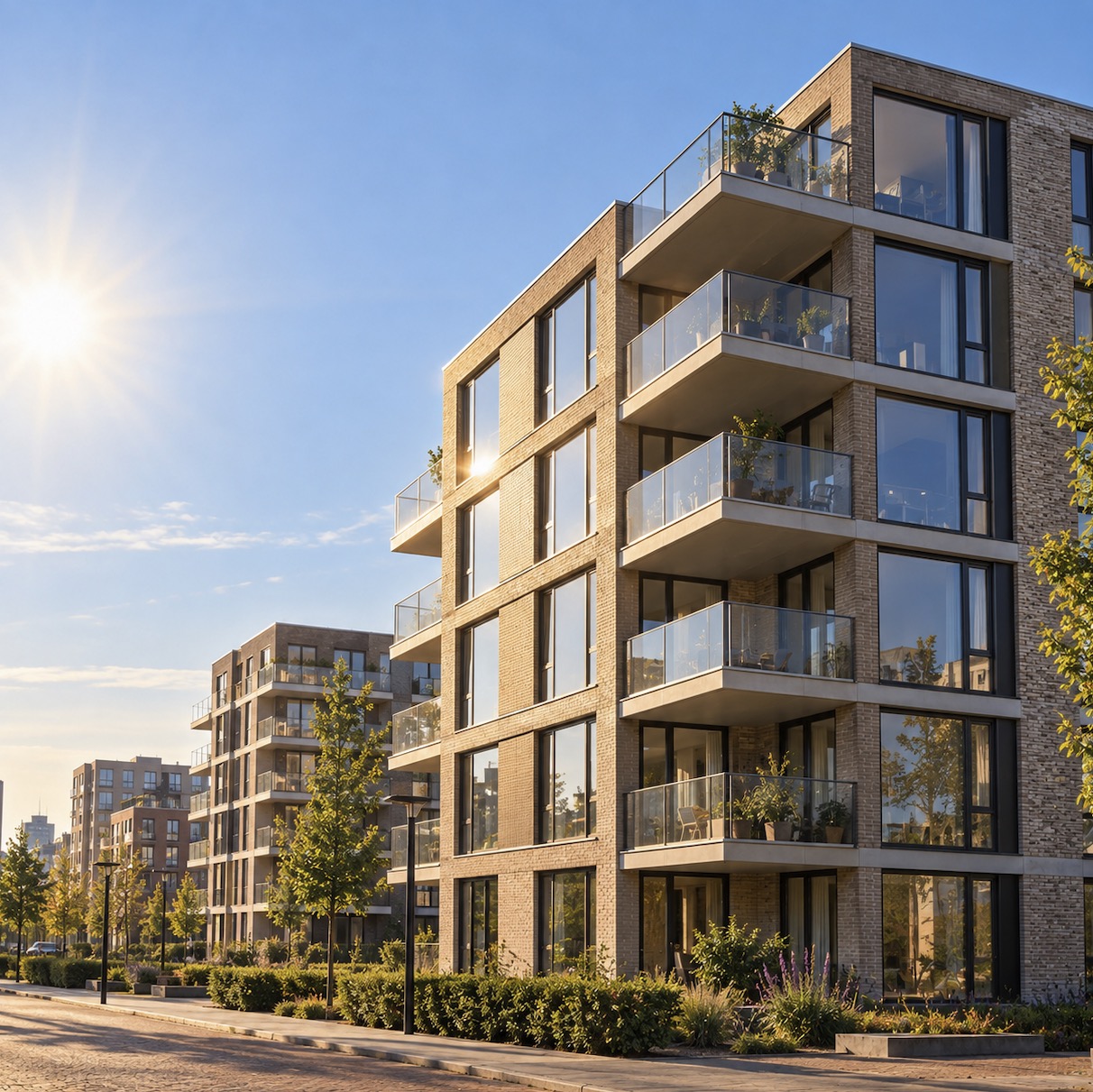
Since 2023, at least half of all newly built homes in the Netherlands have been apartments. The total apartment stock has now grown to over 3.1 million units across the country.
And the pipeline suggests more of the same. Of all the building permits currently approved for future construction, 73 percent are for apartments. The Netherlands currently has slightly more terraced houses than apartments in its total housing stock, but that gap is narrowing fast.
This shift is not accidental. It reflects deliberate planning decisions at both national and municipal level. Land is scarce, housing demand is high, and building upward is more efficient than building outward.
Unsurprisingly, the concentration is highest in the major cities.
In Rotterdam and Utrecht, over 97 percent of new homes built last year were apartments. Amsterdam and Eindhoven were close behind, both exceeding 90 percent. Across the country, apartments were the most common new build type in 192 out of 340 Dutch municipalities.
For buyers focused on city living, which describes most expats and many first-time buyers, the market is almost exclusively apartment-driven. Terraced houses and semi-detached properties are increasingly the preserve of suburban and rural locations.
Here is the part of the data that deserves attention. The average floor area of a newly built home in the Netherlands fell to 99 square meters in 2025. In 2021, that figure was 118 square meters. That is a drop of nearly 20 percent in just four years.
The trend breaks down by property type:
Terraced houses shrank from an average of 127 to 115 square meters over five years.
Apartments fell from 73 to 65 square meters on average. A meaningful reduction for a property type already defined by compact living.
Semi-detached and detached homes saw smaller reductions of 3 and 5 square meters respectively, reflecting their lower construction volumes and different buyer profiles.
The direction is consistent across all property types. New builds are getting smaller, and apartments are leading that compression.
The shift toward smaller apartments affects buyers in practical ways that go beyond personal preference.
Mortgage lenders in the Netherlands base how much you can borrow on two factors: your income and the value of the property. A smaller apartment in a high-demand city may carry a high price per square meter, but its absolute value may still be lower than a larger property. This affects your loan-to-value ratio and what lenders will approve.
Understanding how a lender values a compact new-build apartment, particularly in a city like Rotterdam or Amsterdam,. is something worth exploring with an independent mortgage advisor before you make an offer.
Buying a newly built property comes with a different mortgage process than buying an existing home. You typically pay in stages as construction progresses, which means your mortgage is drawn down in instalments rather than in one lump sum. During construction, you pay interest on what has been drawn down, not on the full mortgage amount.
This can be an advantage! Your early monthly costs are lower, but it requires careful planning and an advisor who understands the new build process.
New build apartments are almost always delivered with a high energy label, often A or A+. This matters because Dutch mortgage regulations allow you to borrow up to 106 percent of a property's value when investing in energy-saving improvements. For a brand new, energy-efficient apartment, you are already starting in a strong position from an energy perspective, which can influence your financing options positively.
If you have recently arrived in the Netherlands and are considering buying rather than renting, the apartment-heavy new build market is directly relevant to your options.
City-based apartments are the most available new build product. But they are also the most competitive. Demand in Amsterdam, Rotterdam, and Utrecht consistently outpaces supply, and new developments often sell quickly.
As an expat, you may also face additional complexity around mortgage qualification, income verification, visa type, and employment contract duration all factor into lender decisions. Getting a clear picture of your borrowing capacity before you start viewing properties saves significant time and frustration.
For first-time buyers, a 65 square meter apartment in a major Dutch city may be the realistic entry point into ownership. That is a practical trade-off many buyers are making, accepting a smaller space in exchange for the financial benefits of ownership, the stability of fixed mortgage payments, and long-term equity growth.
The key is going in with clear numbers. Know what you can borrow, understand what the total purchase costs are (including transfer tax, notary fees, and advisor costs), and make sure the monthly payment is genuinely sustainable at today's rates.
69,000 new homes sounds like a lot. But the Netherlands has a structural housing shortage estimated at several hundred thousand units. New construction is helping, but not fast enough to meaningfully ease price pressure in the short term, particularly in the major cities where demand is most concentrated.
For buyers, this means competition is not going away. Getting your financing in order before you start your search is not just good advice, in this market, it is the difference between securing a property and missing it.
Whether you are looking at a new build apartment in Rotterdam or a terraced house in a smaller municipality, the mortgage process is the same: getting independent, expert advice early gives you a real advantage.
At Financial Consultancy Holland, we work with expats and first-time buyers across the Netherlands every day. We understand the new build process, the lenders who work best for your situation, and the regulations that affect what you can borrow. Let us help you build a clear plan before you make your move.
Reach out to Financial Consultancy Holland, independent mortgage advisors working entirely in your interest.
Contact Financial Consultancy Holland:
Email: info@fc-holland.nl
Phone: 0622870981
Address: Boompjes 40, 3011 XB Rotterdam