Finance
May 28, 2026
The Dutch Housing Market Is Finding Its Balance
The Dutch housing market showed its first signs of balance in Q1 2026. Here is what the latest NVM data means for buyers.
The Dutch housing market showed its first signs of balance in Q1 2026. Here is what the latest NVM data means for buyers.
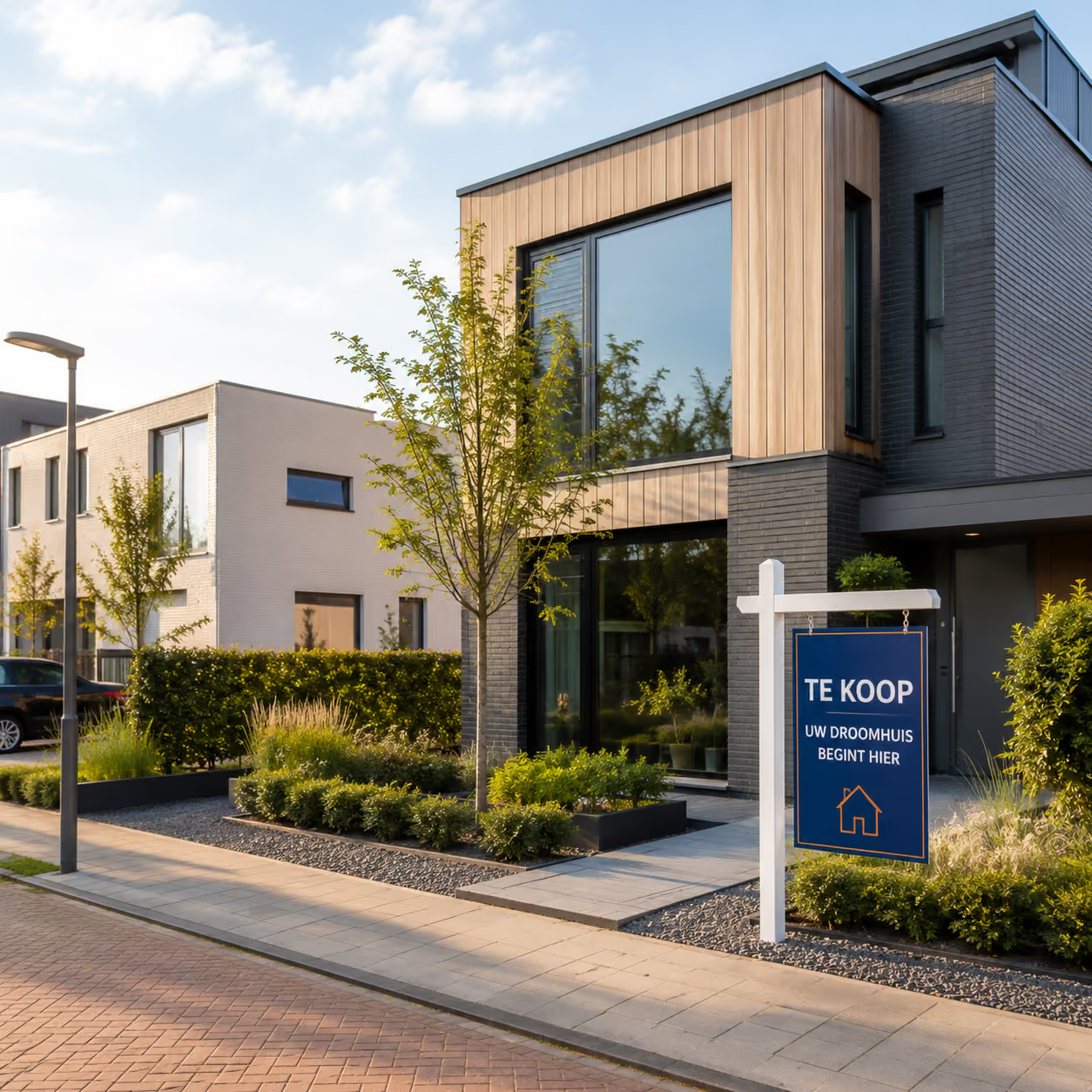
For the first time in years, the Dutch housing market is showing signs of cooling, not collapsing, but rebalancing. The latest figures from the NVM (Dutch Association of Real Estate Agents) paint a picture of a market where buyers are slowly regaining ground. More supply, less frantic competition, and slightly more time to make decisions.
If you are planning to buy a home in the Netherlands this year, understanding what is shifting, and what is not, will help you move with more confidence.
The average sale price of an existing home came in at €485,000 in Q1 2026. That is 2.7 percent lower than the previous quarter, though still slightly above the same period last year.
Transaction volumes also dipped, driven by a combination of higher mortgage rates and broader economic uncertainty. Homes are sitting on the market longer than they were a year ago, and the frequency of aggressive overbidding is declining.
On the surface, this sounds like a buyer's market forming. But the NVM is clear: the market remains tight, particularly for move-in-ready homes and properties with strong energy ratings. Affordability is still a significant challenge for many buyers.
Rising inventory is the main driver of the shift in market dynamics. More homes are being listed, giving buyers more options and slightly more negotiating room than they had during the peak years of 2021 and 2022.
The new build segment tells a more cautious story. Supply has increased there too, but sales are slower. High construction costs, long lead times, and uncertainty around financing are making buyers more hesitant to commit to off-plan purchases. If you are considering a new build, factor in that delivery timelines and financing structures differ significantly from buying an existing property.
One development worth knowing about, especially if you are buying an older property, is a regulatory change that took effect on 1 April 2026.
Foundation risk classifications are now a standard part of the property valuation process in the Netherlands. Every home being valued for a mortgage will be assessed and assigned a foundation risk class. For properties that fall into risk class D or E, lenders will require additional investigation before the mortgage can proceed.
This additional investigation takes the form of a QuickScan or a Phase 0 Foundation Assessment. The cost for properties under 800 cubic meters is approximately €450 including tax.
Why does this matter for buyers? Because if you are purchasing an older home, particularly in areas of the Netherlands with soft soil or known subsidence issues, this assessment could add time and cost to your purchase process. It is not a reason to avoid older properties, but it is something to factor into your planning and budget from the start.
Ask your mortgage advisor to flag the foundation risk class of any property you are seriously considering before you make an offer. Surprises at this stage cost time and money.
The shift toward a more balanced market is genuinely good news for expats who have been priced out or outcompeted in previous years. More inventory means more options. Less overbidding pressure means you have slightly more time to conduct proper due diligence, get your financing confirmed, and make considered decisions rather than reactive ones.
That said, the most desirable properties in Amsterdam, Rotterdam, and Utrecht continue to attract strong interest. The balance is appearing at the edges of the market, not at the top. If you are targeting city-centre apartments or energy-efficient homes, expect competition to remain real.
As an expat, your biggest advantage in this market is preparation. Knowing your maximum borrowing capacity, having your documents ready, and working with an independent mortgage advisor who understands the full picture puts you ahead of buyers who are still figuring out their finances when the right property appears.
A slight easing in overbidding is meaningful for first-time buyers who have historically struggled to compete against more experienced buyers with larger deposits.
However, with an average price of €485,000 and mortgage rates that have ticked up in recent months, affordability remains the central challenge. First-time buyers in the Netherlands benefit from transfer tax exemption on properties under €510,000, a saving of nearly €10,000 at current price levels that makes a real difference to your total upfront costs.
The key calculation for any first-time buyer right now is not just whether you can afford the purchase price, but whether the monthly mortgage payment is sustainable across different rate scenarios over the next decade. A good independent advisor will model this for you honestly.
The market is shifting, but it has not transformed. Here is how to position yourself well.
Get your mortgage capacity confirmed. With rates moving and affordability tightening, knowing your exact budget before you start viewing is more important than ever. Do not rely on online calculators, speak to an independent advisor who can give you a real figure based on your income, employment status, and residency situation.
Account for the foundation risk assessment. If you are looking at properties built before 1970, or in areas with known soil instability, ask your advisor and valuer about the foundation risk class early. Build the potential cost of a Phase 0 assessment into your budget from the start.
Do not wait for a bigger correction. The structural supply shortage in the Netherlands has not changed. The current easing is a moderation, not a reset. Buyers who waited through 2023, 2024, and 2025 for a significant correction have watched prices recover to record levels. Buying when you are genuinely financially ready remains the most reliable strategy.
Use the breathing room wisely. Slightly longer viewing windows and less overbidding pressure give you the opportunity to do proper due diligence, have a building inspection done, understand the energy label and its implications, and get legal advice on the purchase contract before you sign.
Q1 2026 is the first quarter in several years where buyers in the Netherlands have had more room to breathe. That is a meaningful shift, but it does not mean the market has become easy. Prices are still high, mortgage rates have risen, and the most desirable properties remain competitive.
What it does mean is that preparation and expert guidance matter more than speed right now. If you go into the market informed, financially ready, and supported by an independent advisor who understands your specific situation, you are in a strong position to make a confident decision.
At Financial Consultancy Holland, we work with expats and first-time buyers across the Netherlands every day. We give you a clear picture of what you can borrow at today's rates, explain how new regulations like the foundation risk classification affect your purchase, and help you navigate the full mortgage process from first conversation to signing.
Reach out to Financial Consultancy Holland, independent mortgage advisors working entirely in your interest.
---
Contact Financial Consultancy Holland:
Email: info@fc-holland.nl
Phone: 0622870981
Address: Boompjes 40, 3011 XB Rotterdam