More Homes for Sale, Slower Price Growth: What the Q3 2026 Dutch Housing Data Means for Buyers
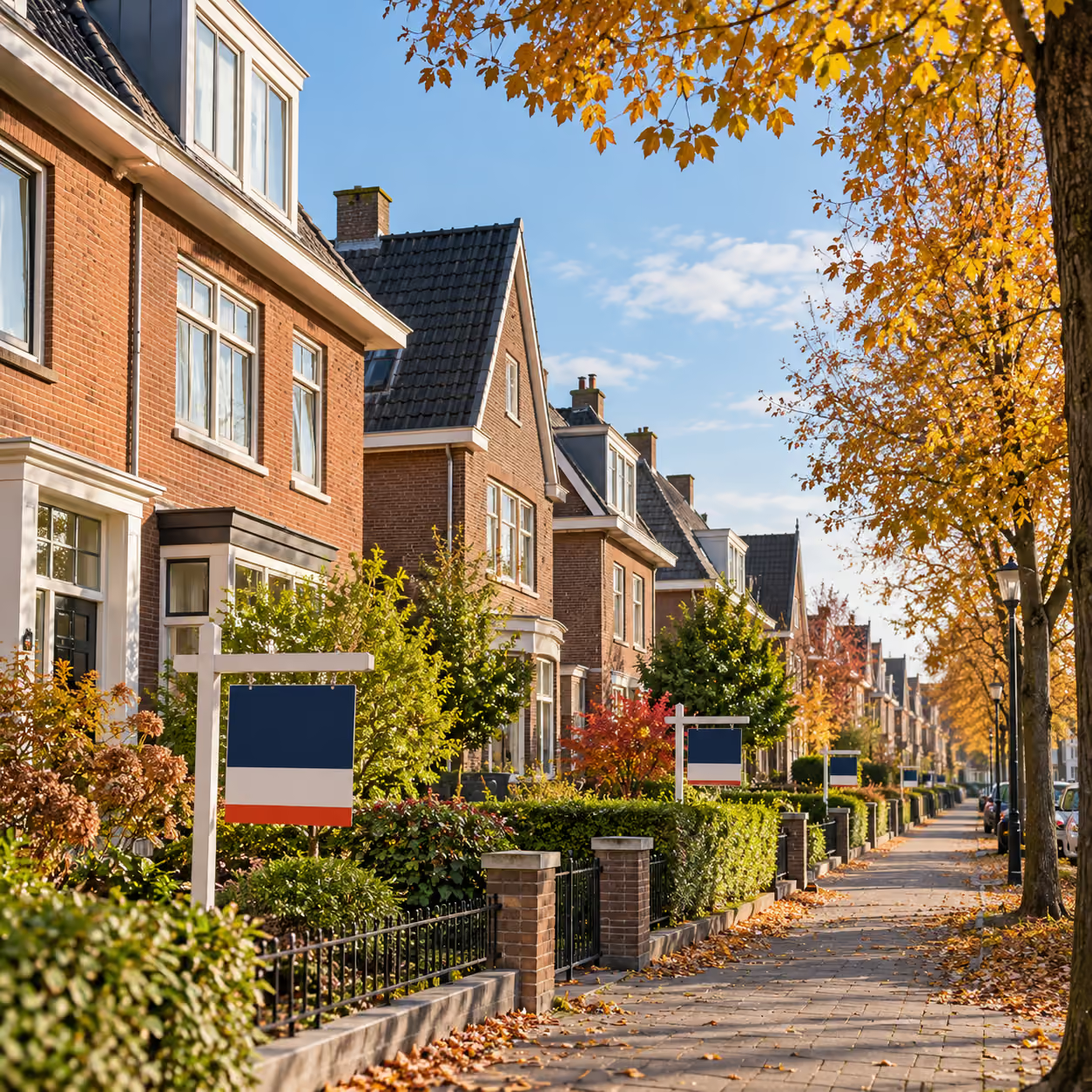
Dutch buyers have spent years in a market where choice was scarce and speed was everything. The third quarter of 2026 shows that this is starting to change. The number of existing homes for sale is up sharply, price growth is losing momentum, and fewer buyers are paying above the asking price.
It is not a buyer's market yet. But it is a different market from the one you may have read about a year ago. Here is what the numbers show and what they mean if you are planning to buy.
Supply Is Up 24 Percent
The number of existing homes listed with NVM real estate agents in Q3 2026 was 24 percent higher than a year earlier. At the end of the quarter, around 39,000 existing homes were on the market, 6 percent more than in the previous quarter.
Sales held up. Agents sold about 41,700 homes, roughly the same as a year ago. Compared with Q2, sales fell 8 percent. Part of that is the usual summer slowdown. The rest comes from buyer uncertainty and slightly weaker demand.
One driver of the extra supply is worth knowing about: former rental properties. Many private landlords are selling, which adds to the number of homes for sale and has boosted apartment sales in particular. If you rent, a previous article on this blog explains your rights when your landlord decides to sell.
Prices Are Still Rising, But Slowly
The average sale price of an existing home rose 1.8 percent year on year to €503,000. That is a clear slowdown compared with the rises we saw earlier in the recovery.
The split by property type is useful:
Apartments and terraced houses rose 1.2 percent year on year.
Semi-detached and detached homes rose just over 3 percent.
The NVM points to three reasons for the slowdown: more supply, higher mortgage rates, and cautious buyers. All three are connected. When rates rise, buying power falls. When buying power falls, buyers become more selective. When buyers are more selective and there is more choice, prices stop climbing as fast.
Less Overbidding, Slightly Longer Sales
Nearly two thirds of homes sold above the asking price in Q3. A year ago, that figure was 71 percent. Homes also took a little longer to sell: 31 days on average, up from 29.
Two days does not sound like much. But combined with the drop in overbidding, it points to a market where buyers have more room to think. As the chair of NVM Wonen put it, more supply means more choice, the chance to book a second viewing, and in some cases more room to negotiate.
The Market Is Still Tight
Do not mistake this for a soft market. The NVM tightness indicator, which compares supply with sales, rose from 2.3 to 2.8. Any value below 5 counts as a tight market. So the Netherlands moved in the right direction for buyers but remains firmly in tight territory.
The pressure is highest on terraced houses. Supply of this type remains limited compared with the number of buyers looking for one. If a terraced family home is your target, expect competition to continue.
Regional Differences Are Large
The national average hides very different local stories.
Prices rose 8.3 percent in Southwest Drenthe and 6.7 percent in North Limburg. At the other end, prices fell slightly in Zeeuws-Vlaanderen, the rest of Zeeland, and the Haarlem and Leiden areas. Greater Amsterdam rose just 0.6 percent.
The lesson for buyers is practical. A figure like €503,000 tells you very little about the home you are actually looking at. Local supply, local demand, and the property type matter far more than the national headline. If you are flexible on location, the data shows that some regions offer much better conditions than others.
Maintenance and Energy Quality Affect How Fast Homes Sell
An analysis of sold homes shows that quality matters. Homes with a high quality score, which reflects maintenance condition and energy performance, sold in an average of 28 days. Homes with a low score took 36 days.
For buyers, that cuts both ways. A well-maintained, energy-efficient home will face more competition. A home that needs work may give you more negotiating room, but you should price in the cost of improvements. Some energy-saving upgrades can be included in your mortgage, so it is worth discussing this with an advisor before you make an offer.
New Build: Record Supply, Falling Sales
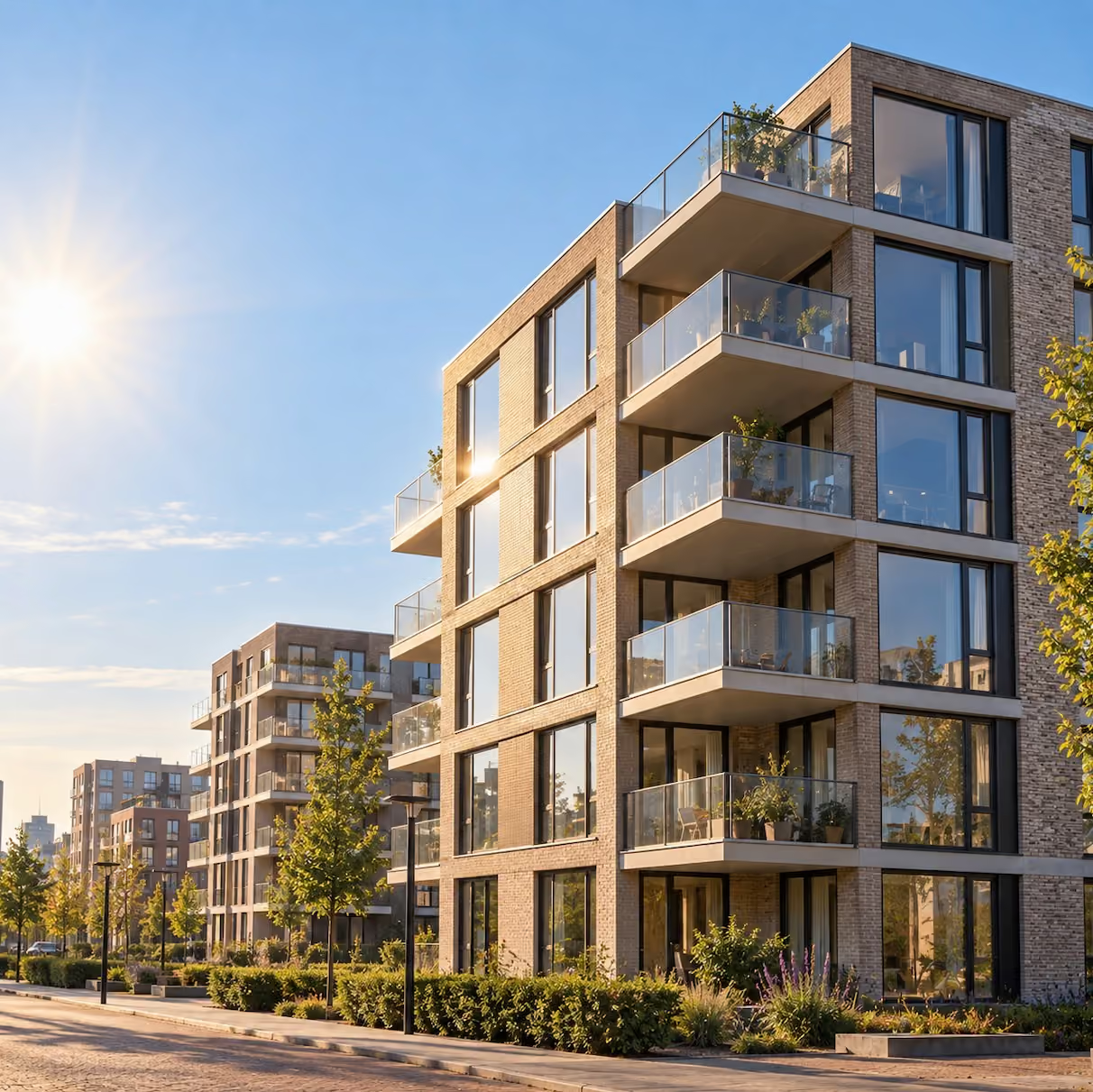
The new build market is moving in the opposite direction from what you might expect. Supply grew about 17 percent year on year to 21,500 homes, the highest level since the end of 2015. Yet sales fell from around 6,400 to 6,000. It is the fourth quarter in a row with fewer new build sales than a year earlier.
The median new build price stayed flat at €504,000, but the price per square meter rose 4.8 percent to about €5,320. In plain terms, buyers are getting less living space for the same money.
Several obstacles are holding buyers back: long construction times, bridging costs while you wait for delivery, and uncertainty about what your current home will sell for. With more existing homes on the market, many buyers simply have better alternatives.
Apartments make up 63 percent of the new build supply. The NVM argues that too few new homes with gardens are being offered. If you want a family home with outdoor space, the new build pipeline may not deliver what you are looking for.
What This Means for You
For First-Time Buyers
This is the most encouraging data in years for first-time buyers. More choice, less overbidding, and more time between viewing and offer all work in your favor. Use that time well. Book second viewings, check the energy label and maintenance status, and make sure your finances are confirmed before you bid.
Higher mortgage rates still shape what you can afford. Your borrowing capacity should be calculated at today's rates, not last year's.
For Expats
A slower market helps expats more than most. Documenting foreign income, employment contracts, and residency status takes time. When overbidding pressure eases, you are less likely to lose a home while your paperwork is being processed.
Preparation still matters. The best homes in popular areas continue to sell quickly. Having your mortgage assessment completed before you start viewing is the single most effective way to compete.
For Existing Homeowners
If you plan to sell, expect a slightly longer sale and fewer offers above asking price. Realistic pricing and a well-maintained, energy-efficient home will make the biggest difference. If you are also buying, coordinate both transactions carefully with your advisor to avoid a gap between selling and buying.
Should You Wait for Prices to Fall?
The data does not support waiting for a big drop. Prices are still rising, even if slowly, and the market remains tight overall. The structural shortage of homes has not gone away.
What has changed is the pressure. You no longer need to make a rushed decision on a single viewing. That is a real advantage, and it is available now, not at some uncertain point in the future. If you are financially ready, this is a sensible time to start looking seriously.
What to Remember
Supply is up 24 percent year on year. Average prices rose 1.8 percent to €503,000. Fewer homes sell above asking price, and sales take a little longer. The market is still tight, especially for terraced houses. Regional differences are large, and new build sales continue to lag despite record supply.
Get Clear Numbers Before You Start Viewing
A calmer market rewards buyers who know exactly what they can borrow and what they can afford each month. At Financial Consultancy Holland, we work with expats and first-time buyers across the Netherlands every day. We give you a straight picture of your options at current rates and help you build a plan that fits your situation.
Reach out to Financial Consultancy Holland for independent mortgage advice tailored to you.
Contact Financial Consultancy Holland:
Email: info@fc-holland.nl
Phone: 0622870981
Address: Boompjes 40, 3011 XB Rotterdam