Mortgages
September 10, 2026
Why New Dutch Homes Are Being Built for a Climate That No Longer Exists
New Dutch homes are designed for a cooler climate than we now have. Here's what overheating risk means if you're buying a newly built home.
New Dutch homes are designed for a cooler climate than we now have. Here's what overheating risk means if you're buying a newly built home.
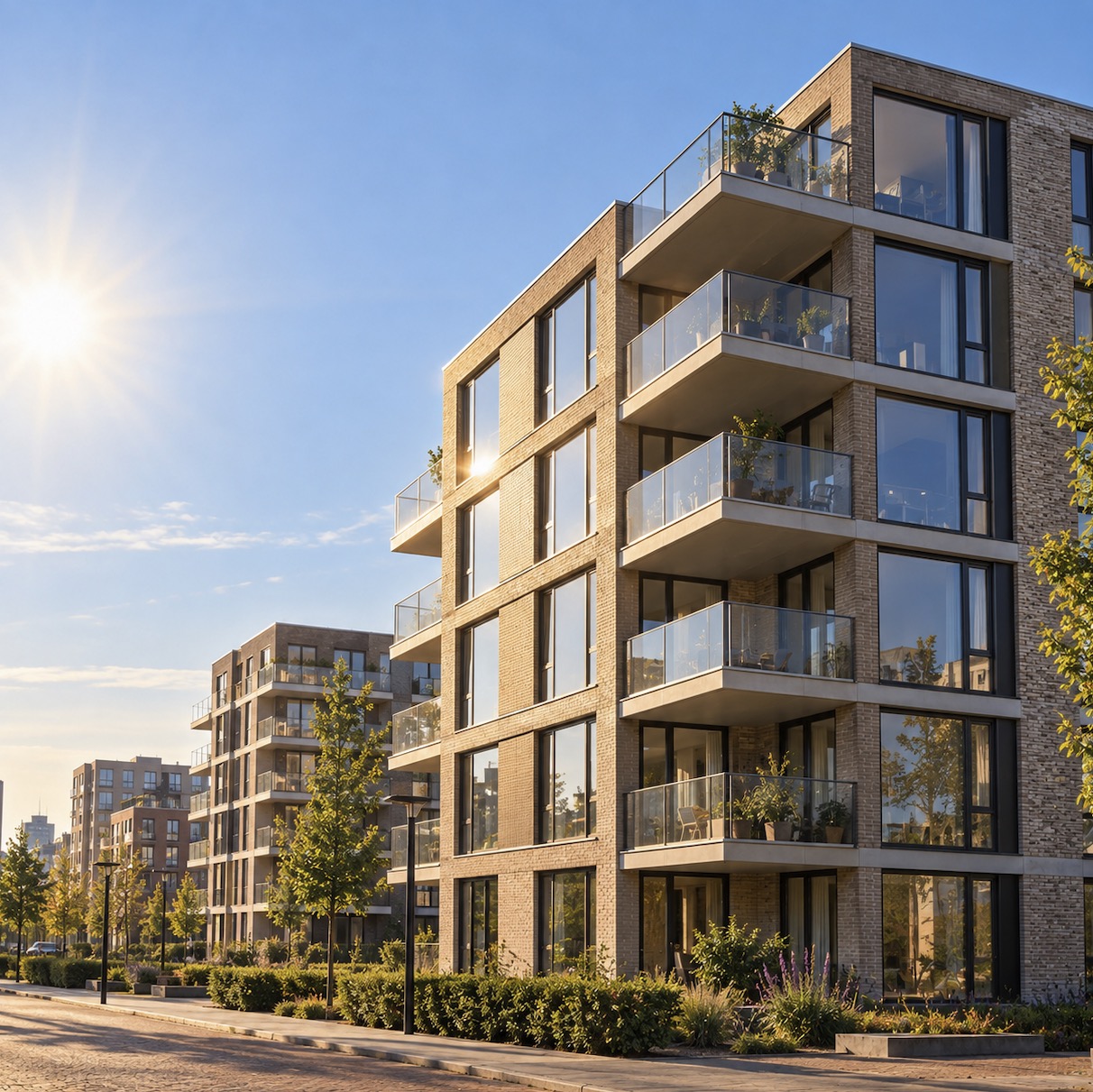
The Netherlands is racing to build 100,000 new homes a year. That's good news for anyone trying to buy their first home in a tight market. But there's a catch buyers rarely hear about: many of those brand-new homes are being designed for a climate that, by the time the paint dries, will already be out of date.
A home built today is expected to still be standing in 2050 and beyond. Yet the heat-related building standards used to design it right now are based on historical Dutch weather data from 1996 to 2015, a period noticeably cooler than what the Netherlands is already experiencing. That gap matters more than it sounds, especially if you're weighing up hypotheekregels Nederland (Dutch mortgage rules) and long-term homeownership costs before signing anything.
Overheating in Dutch homes isn't a minor inconvenience. During heatwaves, deaths among older adults and other vulnerable groups rise measurably. Many existing homes were simply never designed with this kind of heat in mind, and building science experts are now warning that new construction may eventually face the same problem, just on a delay.
It's not just hot days that cause trouble. When nighttime temperatures stay high, a home's indoor heat has no chance to release. The body cannot cool down properly, forcing the heart to work harder while people sleep. Older adults, people with chronic illnesses, and pregnant women face the highest risk. As tropical nights become more frequent across the Netherlands, this isn't a theoretical future problem, it's already happening.
Since 2021, new-build homes in the Netherlands have had to meet a heat-related design standard, generally referred to as the 'TOjuli' requirement. Architects use it to guide decisions on glazing, orientation, ventilation, and sun shading. The problem is the climate data behind that standard reflects the past, not the future. Updated norms accounting for a warmer climate are in development, but they are not expected to become part of the official building code until around 2030.
Current heat calculations for new homes also barely account for the urban heat island effect, where cities and larger towns hold onto daytime heat well into the night because there's less greenery and more asphalt and concrete to store warmth. The temperature difference between a city center and the surrounding countryside can reach as much as 8 degrees Celsius. For anyone buying a first home in a dense urban area, that's a real factor in future comfort and running costs, even if it never appears on a listing.
This isn't only a new-build issue. Research shows that close to 10 million people in the Netherlands currently live in homes that can become uncomfortably or dangerously warm, including roughly 2 million people over 65. Ironically, well-insulated homes aren't automatically safer. Insulation is excellent for keeping winter cold out, but without enough ventilation and proper sun shading, it can just as easily trap summer heat inside.
As homes overheat, more households reach for air conditioning, and energy providers have already recorded sharp spikes in electricity use during heatwaves. Experts agree air conditioning has its place, particularly in care homes and public buildings, but for most homeowners, prevention is far cheaper than cooling after the fact. The most effective fix is exterior sun shading, paired with thoughtful window placement and good ventilation, not a bigger air conditioner.
If eerste huis kopen (buying your first home) is on your radar, don't assume 'new build' automatically means 'future-proof.' It's reasonable to ask a developer or estate agent directly about sun shading, window orientation, and ventilation design, not just insulation values. These details affect your comfort and your energy bills for decades, and they're worth factoring into your overall budget alongside your mortgage.
If you're arranging a hypotheek voor expats (mortgage for expats) and comparing new-build options, heat resilience is a practical detail that's easy to overlook when you're also learning how Dutch financing, taxes, and homeownership rules work all at once. A slightly less glazed facade or a home with good cross-ventilation can make a meaningful difference to your summer comfort, and it costs nothing extra to ask about it before you commit.
If you already own an older home, you don't need to wait for national rules to catch up. Exterior blinds, shutters, or awnings, along with better ventilation habits, can meaningfully reduce indoor heat without a major renovation. It's also worth checking whether such upgrades affect your home's energy label or insurance considerations down the line.
New Dutch homes are not automatically protected from the heat the country is increasingly experiencing. The rules guiding today's construction are based on a cooler climate than the one we already live in, and updated standards won't be mandatory until around 2030. In the meantime, both new-build and existing homes benefit from practical measures like sun shading, smart window placement, and good ventilation, well ahead of the next heatwave.
None of this should discourage you from buying a home in the Netherlands. It simply means asking a few more informed questions before you sign, about design, orientation, and long-term comfort, not just price and location. Combined with clear guidance on hypotheekadvies (mortgage advice) tailored to your situation, you can make a decision that holds up just as well in 2050 as it does today.
If you're exploring your options, whether that's a first home, a mortgage for expats, or simply want a second opinion on a property you're considering, Financial Consultancy Holland offers independent, personal guidance as an onafhankelijk hypotheekadviseur (independent mortgage advisor). Feel free to reach out whenever you'd like to talk through your situation.