Mortgages
January 19, 2026
How Much Do You Need to Earn to Buy an Average Home in the Netherlands in 2026?
Buying a home in 2026? Discover how much income you need in the Netherlands and what today’s mortgage rules mean for buyers.
Buying a home in 2026? Discover how much income you need in the Netherlands and what today’s mortgage rules mean for buyers.

Buying a home in the Netherlands has never been a simple numbers game. In 2026, that’s more true than ever. Mortgage rules change, interest rates fluctuate, and house prices continue to challenge first-time buyers and expats alike.
So the big question many people are asking right now is: how much do you actually need to earn to buy an average home in the Netherlands in 2026?
In this article, we break it down in plain English. No bank jargon. No assumptions that you already understand Dutch hypotheekregels. Just clear guidance, real-life context, and practical insights from an independent hypotheekadvies perspective.
Whether you’re an expat, a starter, or simply exploring your options, this guide will help you understand where you stand—and what’s realistic in today’s housing market.
Before we talk about income, we need to clarify what “average” really means.
An average home is not a specific type of property. It’s not automatically a family house in Amsterdam or a detached home in the countryside. Instead, it’s a statistical average based on all homes sold across the Netherlands.
In recent market data, the average purchase price sits just under €500,000. That number includes:
This means the “average” price doesn’t reflect what most people actually buy—but it does give us a useful benchmark for affordability calculations.
Every year, mortgage regulations in the Netherlands are adjusted. These rules determine how much you’re allowed to borrow based on your income and financial situation.
Under current hypotheekregels Nederland:
For many buyers—especially expats—this system feels strict. But it’s designed to prevent overborrowing and financial stress in the long term.
One factor that often surprises buyers is the impact of a home’s energy label.
In 2026:
Most homes currently on the market fall around energy label B, which offers a modest borrowing advantage compared to less efficient properties.
Think of it this way: an energy-efficient home costs less to run, so lenders assume you have more room in your monthly budget.
Let’s get concrete.
If you’re buying with a partner and want to finance an average-priced home fully with a mortgage, you’re looking at a combined gross annual income of just over €100,000.
This assumes:
For many dual-income households, this is achievable—but it still requires careful planning and realistic expectations.
Single buyers face extra challenges, but there is some good news.
The Dutch system offers additional borrowing capacity for single-income households. This is designed to improve access to the housing market for solo buyers.
As a result, a single buyer would need a gross annual income slightly above €100,000 to fully finance an average-priced home alone.
That’s still a high threshold—and for most singles, it means looking below the national average price.
Here’s where things become more encouraging.
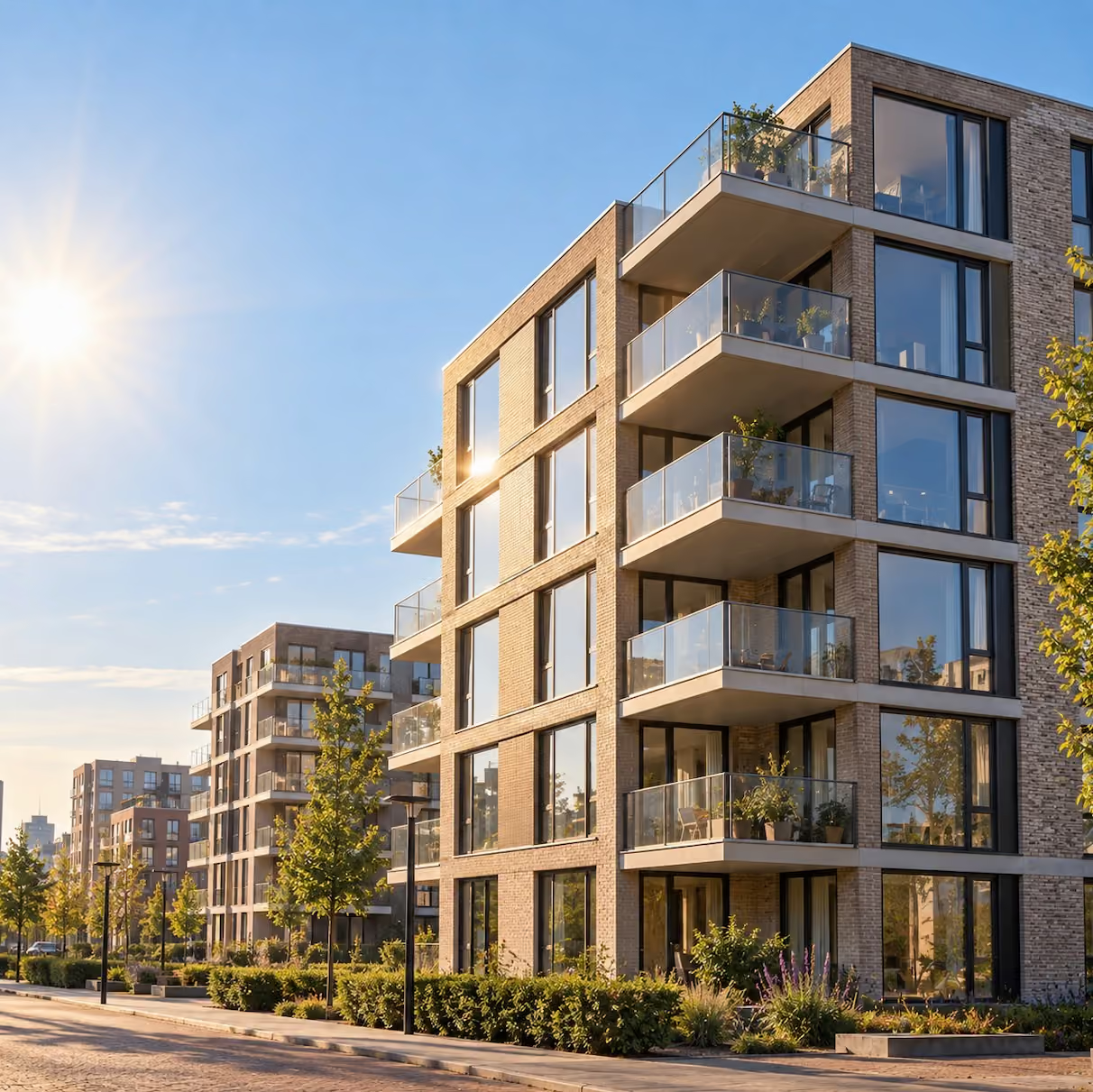
Apartments are typically significantly cheaper than the national average. For an average-priced apartment:
Terraced houses usually sit between apartments and detached homes in price. The income needed is lower than the national average, but higher than for apartments.
For many first-time buyers, these property types offer a realistic first step onto the housing ladder.
If you’re buying your eerste huis, the key takeaway is this:
A good hypotheekadvies focuses on:
Buying below your maximum can often be the smartest move.
For expats, Dutch mortgage rules can feel restrictive—especially if you’re used to different systems abroad.
A hypotheek voor expats requires careful structuring and lender selection. This is where working with an onafhankelijk hypotheekadviseur becomes crucial.
If you already own a home, rising prices can work in your favor.
However, higher prices also mean higher risks when upsizing. Professional advice helps balance opportunity and caution.
The Dutch housing market in 2026 is challenging—but not impossible.
The biggest mistake buyers make is focusing on maximum numbers instead of sustainable choices. A mortgage should support your life, not limit it.
With the right guidance, clear expectations, and independent advice, buying a home in the Netherlands can still be a confident and positive step—even in a competitive market.
If you’re wondering what you can realistically borrow in 2026—based on your income, background, and future plans—independent hypotheekadvies makes all the difference.
At Financial Consultancy Holland, we help expats, starters, and growing families understand their options clearly and honestly. No pressure. No bank bias. Just personal guidance tailored to your situation.
Sometimes, one conversation is all it takes to turn uncertainty into clarity.