Mortgages
January 14, 2026
Rising Free-Market Rents in the Netherlands
Rising free-market rents in the Netherlands are pushing renters to rethink buying. Discover what this means for expats and starters.
Rising free-market rents in the Netherlands are pushing renters to rethink buying. Discover what this means for expats and starters.
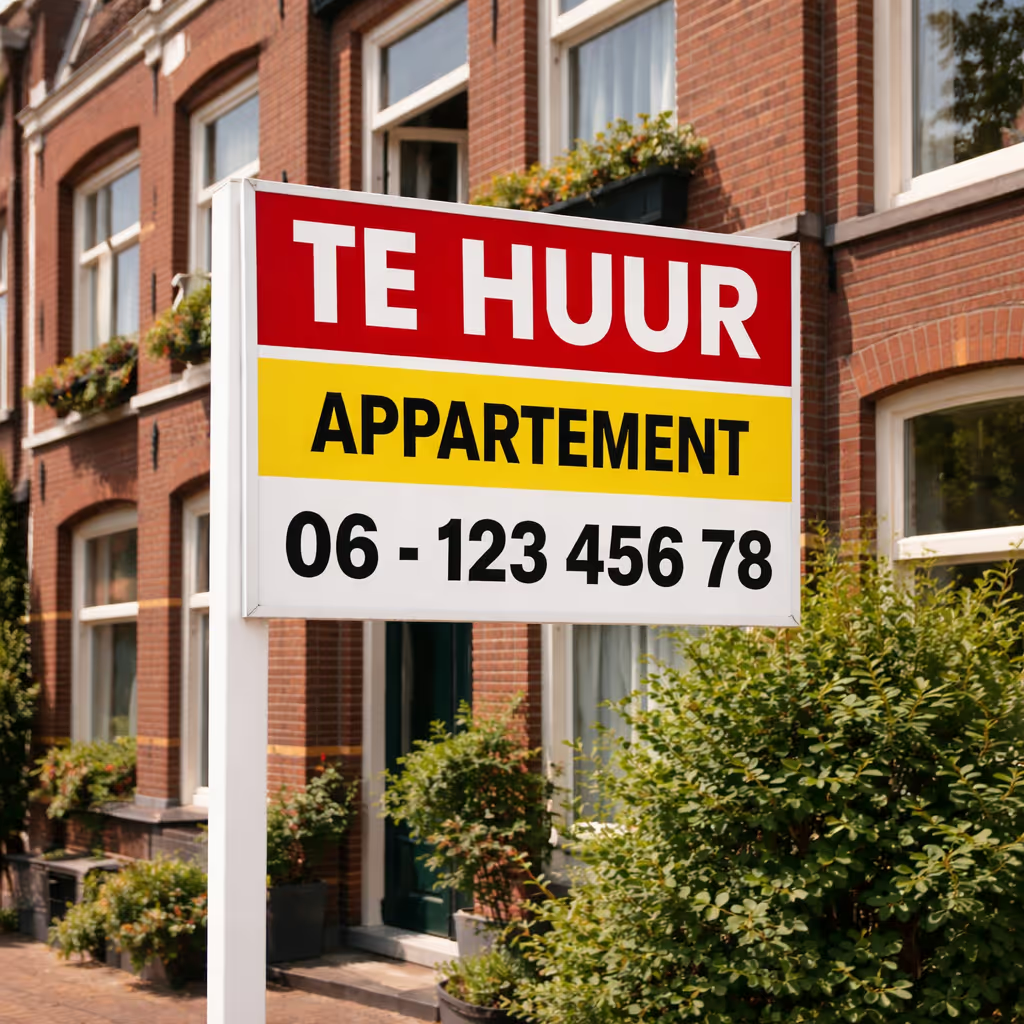
The Dutch housing market continues to surprise, and not always in a positive way. At the end of 2025, average rents in the free-market sector reached a new high. For many people renting privately, especially expats and first-time buyers, this trend feels worrying but also familiar.
Why does this matter right now? Because higher rents don’t just affect tenants. They influence how quickly people decide to buy, how much they can save, and how realistic buying a home becomes in the Netherlands. At Financial Consultancy Holland, we see this every day in conversations with clients who are torn between renting longer or taking the step towards homeownership.
In this article, we explain what’s happening in the free-market rental sector, why affordable rentals are disappearing, and how this directly affects your mortgage options. Most importantly, we’ll help you understand what you can realistically do next.
The free-market rental sector in the Netherlands has become increasingly expensive over the past few years. By the end of 2025, the average monthly rent for a private rental home rose to around €1,838.
That number alone already feels high, but the real challenge lies beneath the average. Many renters are not looking for “average” homes. They are searching for properties below €1,500 per month, because that’s where affordability still feels within reach.
Unfortunately, this is exactly where the pressure is strongest.
Homes with rents up to €1,500 attract by far the most interest. A large share of all tenant responses goes to this category, even though the actual supply is shrinking.
In practical terms, this means:
You may respond to dozens of listings
You face intense competition from other renters
Homes disappear from the market within days
For renters, this can feel like a lottery rather than a housing search.
Rental homes priced between €1,500 and €2,000 per month also receive a lot of attention. This category makes up a significant part of the available supply, yet demand still exceeds what’s comfortable for the market.
For many households, this price range already pushes monthly housing costs to the limit. When rent alone takes up such a large share of income, saving for a future home becomes extremely difficult.
Interestingly, the strongest growth in supply is happening in the highest price segment. More and more free-market rental homes are listed with monthly rents above €2,000.
While supply is increasing at the top end, demand is not keeping pace. Fewer renters can comfortably afford these prices, especially with rising living costs across the board.
This creates a mismatch:
More expensive rentals stay online longer
Affordable rentals vanish quickly
The middle group feels squeezed from both sides
For many people, the conclusion is simple but frustrating: renting no longer feels like a sustainable long-term solution.
Another clear signal of market pressure is speed. In late 2025, a free-market rental home was online for less than three weeks on average before being rented out.
This speed leaves little room for careful decision-making. Viewings are rushed, documentation must be ready instantly, and bidding wars between tenants are becoming more common.
For expats who are new to the Dutch system, this can be overwhelming. For first-time buyers who are still renting, it often raises an important question: how long does it still make sense to rent?
On average, tenants now pay more than €20 per square meter per month nationwide. In major cities, especially Amsterdam, this figure is significantly higher.
Living close to work, schools, or public transport remains attractive, but it comes at a growing cost. For many households, the monthly rent in cities is approaching or even exceeding what a mortgage payment could be.
This comparison is often the turning point that leads people to explore hypotheekadvies seriously.
At first glance, rent prices and mortgages may seem like separate topics. In reality, they are deeply connected.
When rent consumes a large portion of your income, building savings becomes harder. This directly impacts:
Your ability to cover buying costs
Your financial buffer after purchase
Your confidence to take the next step
Many clients tell us they feel “stuck” renting, even though buying might be cheaper month-to-month.
In many cases, a mortgage payment for a starter home can be lower than current free-market rent. This is especially true for people with stable income and a long-term plan to stay in the Netherlands.
Understanding hypotheekregels Nederland is crucial here. The rules determine how much you can borrow, what income counts, and how lenders assess risk.
For people looking to buy their first home, the rental market developments are a wake-up call.
Renting can still make sense in the short term. But if rent keeps rising faster than income, waiting too long may work against you.
Early hypotheekadvies helps you understand:
Your borrowing capacity today
How much you need to save
What timeline is realistic
This clarity alone often brings relief.
Even if buying is still a year or two away, preparing early can make a huge difference. Knowing where you stand gives you options instead of pressure.
Expats are often hit hardest by the free-market rental shortage.
Without knowledge of local rules, expats may overpay or settle for less suitable housing. At the same time, many are surprised to learn they qualify for a hypotheek voor expats.
Dutch lenders do accept foreign income in many cases. The key is proper guidance and realistic expectations.
For expats planning to stay several years, buying can provide stability and predictability. Fixed mortgage payments feel very different from yearly rent increases.
An onafhankelijk hypotheekadviseur helps navigate this process without bias toward a single bank.
Even for homeowners, the rental market matters.
As renting becomes less attractive, more people turn to buying. This keeps pressure on house prices and competition, especially in popular areas.
Understanding the broader housing market helps homeowners make informed decisions about moving, refinancing, or supporting children entering the market.
Rents in the free-market sector are historically high
Affordable rental homes are becoming scarce
Many tenants face fierce competition and short decision windows
High rent often delays or blocks saving for a home
In many cases, buying can be financially comparable or even cheaper
Most importantly, uncertainty is often worse than reality. Knowing your options changes everything.
The Dutch rental market is under strain, and that pressure isn’t likely to disappear overnight. For renters, especially expats and first-time buyers, this creates stress and frustration.
But rising rents also highlight an opportunity. With the right guidance, buying a home may be closer than you think. Understanding your position within the hypotheekregels Nederland and exploring realistic scenarios brings calm in an otherwise hectic market.
You don’t need to decide everything today. You just need clarity.
If you’re unsure whether continuing to rent makes sense or if buying could be a realistic next step, we’re here to help. At Financial Consultancy Holland, we offer independent, personal hypotheekadvies tailored to your situation. No pressure, no jargon, just clear guidance to help you make confident housing decisions in the Netherlands.