Finance
August 17, 2026
Dutch Home Values Hit a New Record of €537,815
The average Dutch home hit a record value of €537,815 in July 2026. Here is what the latest mortgage data means for buyers.
The average Dutch home hit a record value of €537,815 in July 2026. Here is what the latest mortgage data means for buyers.
Despite earlier signals of a cooling market, Dutch house prices reached a new record in July 2026. The average market value of a home hit €537,815 — a 4 percent increase compared to the same month last year. For anyone planning to buy property in the Netherlands, this data is worth understanding closely.
July was also one of the busiest mortgage months of 2026, with 55,018 applications submitted. Summer slowdown? Not in the Dutch housing market.
The composition of mortgage applications is shifting in a telling direction. In July, 67 percent of all mortgage applications were for home purchases — up from 65 percent a year earlier. Meanwhile, applications for refinancing and mortgage top-ups fell from 35 percent to 33 percent over the same period.
This tells a clear story: the market is being driven by people actively buying homes, not by existing homeowners adjusting their existing mortgages. In a period of rising mortgage rates, that is a notable sign of sustained buyer demand.
Perhaps the most striking finding in the July data is the dominance of solo buyers — people purchasing a property entirely on their own, without a partner or co-buyer.
Solo buyers made up 17 percent of all mortgage applications in July, making them the single largest buyer profile for the month. That pushed the traditionally dominant profile — homeowners buying to renovate or upgrade — into second place at 15 percent.
In the first-time buyer segment specifically, the solo buyer trend is even more pronounced. Nearly half — 47 percent — of all first-time buyers purchased alone in July. This reflects a broader social shift in the Netherlands, where more people are choosing or needing to enter the housing market independently.
For solo buyers, this creates a real financial challenge. A single income supports a lower maximum mortgage than a dual income. At an average home value of €537,815, that gap matters significantly. Understanding exactly how much you can borrow as a solo buyer, and which lenders are most flexible in their approach, is something an independent mortgage advisor can clarify quickly.
Here is a detail in the July data that deserves attention: while the average home value rose to €537,815, the average mortgage amount remained virtually unchanged at €378,170.
That gap — roughly €160,000 — is being covered by buyers' own funds. Savings, equity released from a previous property, or gifts from family are increasingly bridging the difference between what lenders will approve and what homes actually cost.
This has two implications. First, buyers with significant savings or existing equity are in a stronger position than ever. Second, buyers without that buffer — particularly younger first-time buyers and expats who have not yet built up savings in the Netherlands — face a widening gap between mortgage capacity and market prices.
If your own funds are limited, this makes the conversation with an independent mortgage advisor even more important. There may be options available — such as borrowing against specific property types, using guarantees, or structuring your application differently — that are not immediately obvious when you approach a single bank.
While solo buyers dominate the headlines, another quieter shift is worth noting. The share of first-time buyers within the total buyer market dropped from 52 percent to 49 percent between July 2025 and July 2026. Move-up buyers — people selling one property to fund the purchase of another — are taking a larger slice of the market.
This matters for first-time buyers because move-up buyers typically have more financial firepower. They bring equity from their previous home, often allowing them to offer more competitive prices or move faster without financing conditions. In a market where competition remains real, first-time buyers need to be well-prepared to compete.
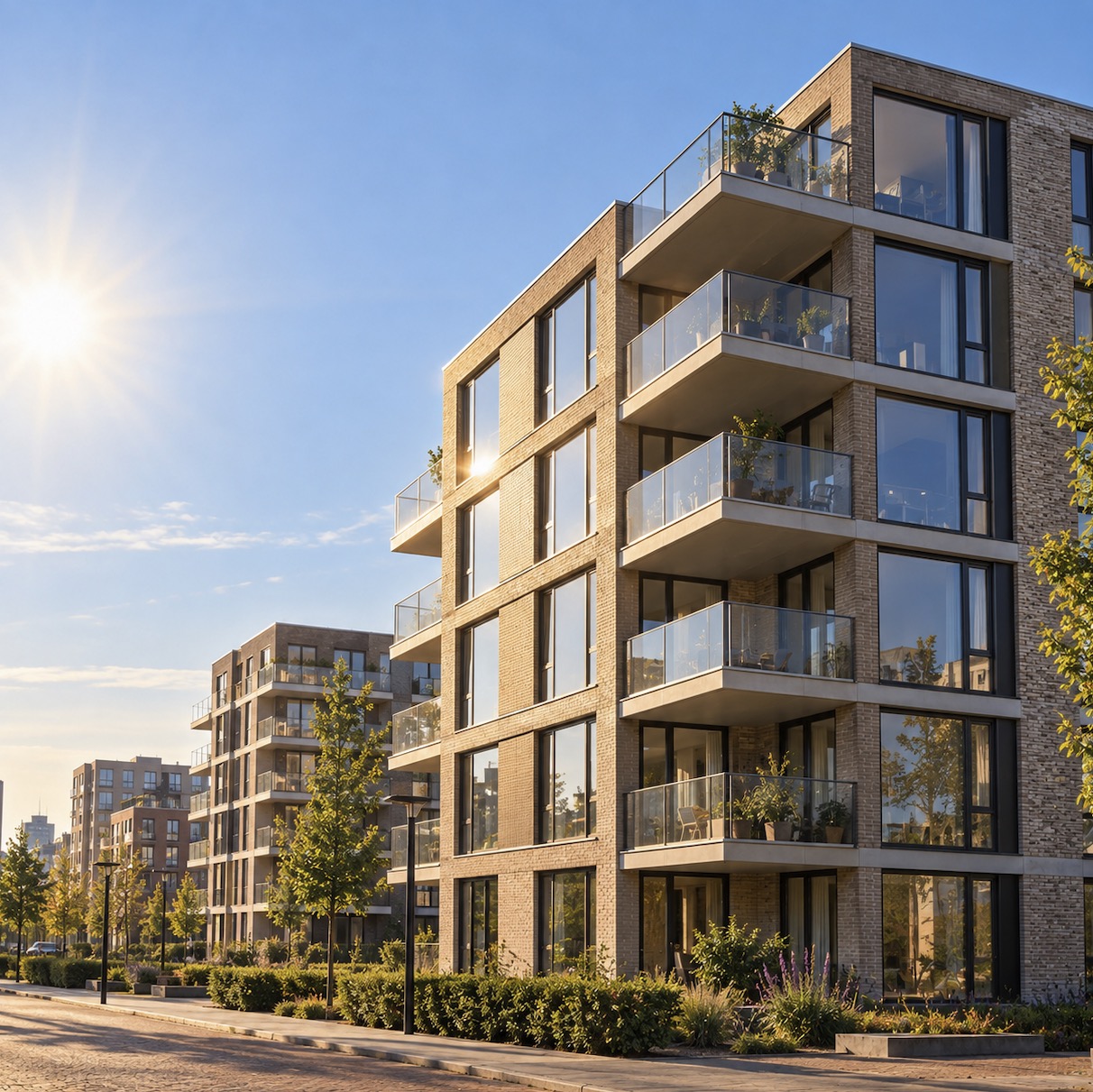
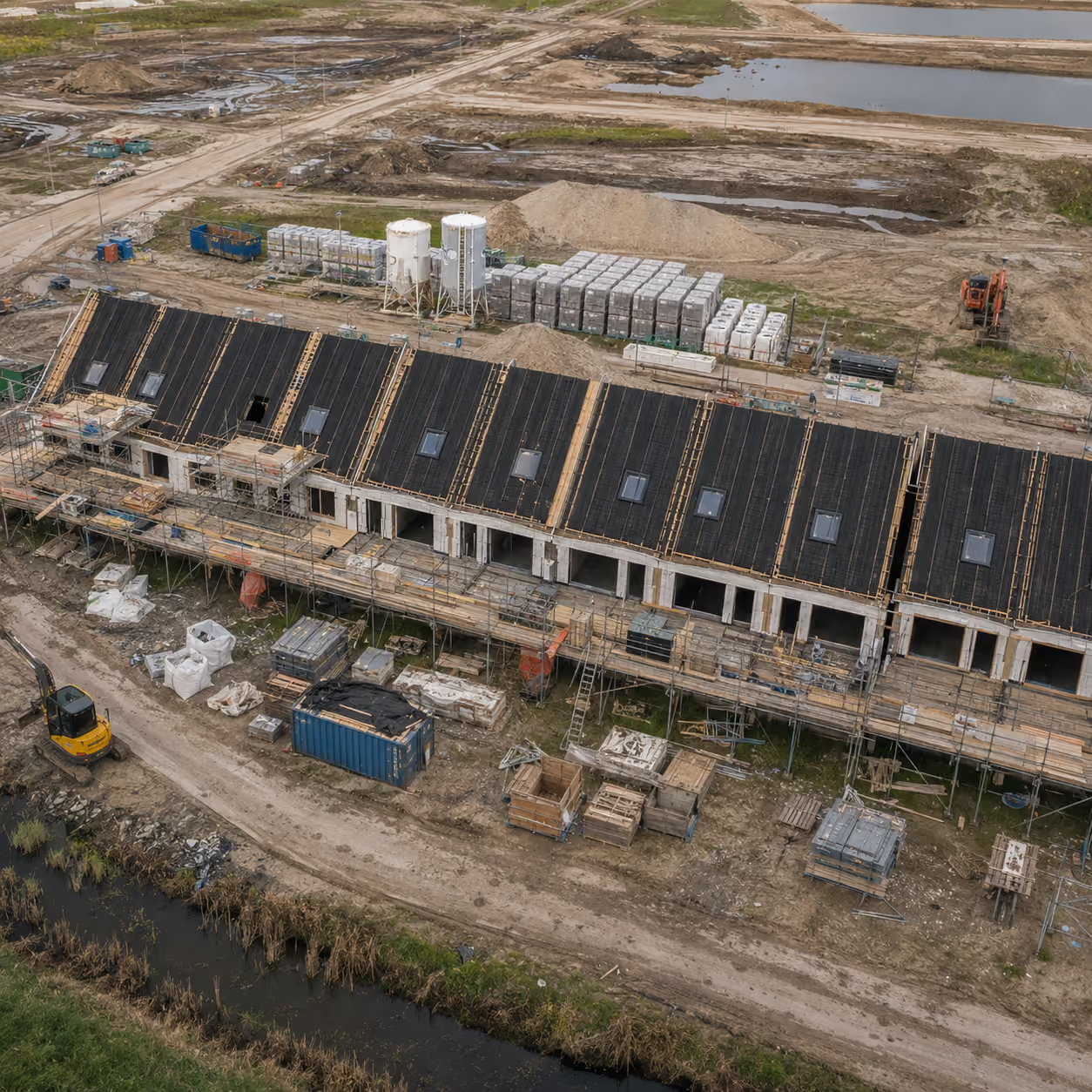
The new build segment showed its own distinct pattern in July. A total of 4,590 new build homes were sold, with solo buyers accounting for 21 percent of those transactions.
The average market value of a new build home was €372,240 — significantly below the overall market average of €537,815. This reflects both the property types being built (primarily smaller apartments, as covered in a previous article on this blog) and the buyer profiles attracted to new build: younger, often solo, and working with tighter budgets.
Almost 40 percent of new build buyers in July were between 25 and 30 years old. This is the generation that cannot afford the existing housing stock at record prices and is turning to new build as a more accessible entry point into ownership.
If you are in this age bracket and considering a new build purchase, there are specific mortgage considerations to be aware of. New build mortgages are structured differently from standard purchases — funds are released in stages as construction progresses, and you only pay interest on the amount drawn down at any given time. Getting advice on how to structure this correctly from the start saves both money and confusion later.
At €537,815, the average Dutch home now sits above the transfer tax exemption threshold of €510,000 for first-time buyers. This means that for an average-priced property, first-time buyers can no longer use the transfer tax exemption — adding roughly €10,762 in additional purchase costs (2 percent of the purchase price).
However, properties below €510,000 still qualify. If you are a first-time buyer, targeting properties under that threshold is a meaningful financial strategy — both to access the exemption and to stay within a more manageable mortgage range on a single income.
Dutch mortgage regulations allow you to borrow a maximum of 100 percent of the property's value. Additional purchase costs — transfer tax, notary fees, valuation costs, and mortgage advisor fees — need to come from your own funds. On an average-priced property, budget for 4 to 6 percent of the purchase price on top of the mortgage.
Record home values make the Dutch market feel increasingly out of reach for expats who have recently arrived and have not yet built up significant savings locally. But the picture is more nuanced than headline prices suggest.
The gap between the average home value (€537,815) and the average mortgage (€378,170) shows that many buyers are contributing substantial equity from previous properties. If you are relocating from a country where you owned property and can bring equity or savings, you may be in a stronger position than you think.
Expats on employment contracts, with 30 percent ruling income, or working for international organisations also have specific considerations that affect mortgage calculations. Some lenders are more experienced with these profiles than others. Working with an independent mortgage advisor who understands the expat landscape gives you access to lenders who may offer more than a standard bank would.
July 2026 confirmed several things simultaneously: the Dutch housing market is busy, home values are at record levels, solo buyers are a dominant force, and buyers are increasingly relying on their own funds to bridge the gap between mortgage limits and market prices.
None of this makes buying impossible. But it does make preparation essential. Knowing your exact borrowing capacity, understanding what funds you can bring to the table, and identifying which lenders are best suited to your profile are the steps that separate buyers who succeed in this market from those who keep missing out.
At Financial Consultancy Holland, we work with solo buyers, expats, first-time buyers, and move-up buyers across the Netherlands every day. We give you a clear, honest picture of what you can borrow and how to structure your purchase at current market conditions.
Reach out to Financial Consultancy Holland — independent mortgage advisors working entirely in your interest.
---
Contact Financial Consultancy Holland:
Email: info@fc-holland.nl
Phone: 0622870981
Address: Boompjes 40, 3011 XB Rotterdam